Related Articles
- 7 Game-Changing Medical Compliance Apps From the Last 5 Years Redefining User Experience and Data Security
- Unveiling the Impact of Human Factors on Medical Software Adherence in Complex Clinical Settings
- Exploring Ethical Dilemmas in Medical Imaging Software: Patient Privacy and Data Ownership in the Digital Age
- Unveiling the Quiet Revolution: How Medical Imaging Software is Shaping Rare Disease Research and Diagnosis
- 5 Cutting-Edge Medication Management Apps Released Since 2019 Ranked for Accuracy and User Trust
- Unlocking the Forgotten: How Mobile Apps Are Shaping Rare Disease Diagnosis and Patient Advocacy Networks
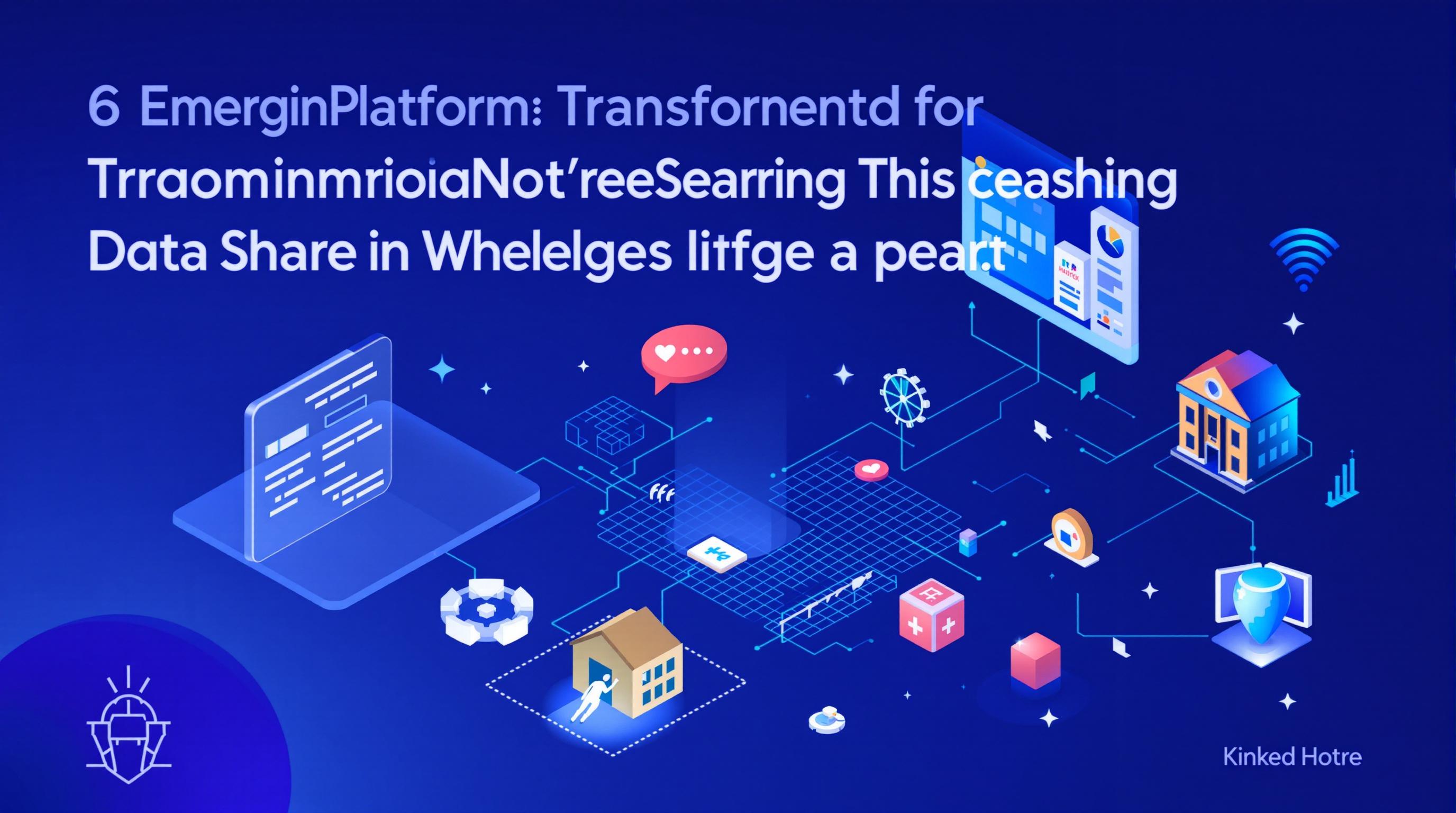
6 Emerging Platforms Transforming Seamless Healthcare Data Sharing in Recent Years Ranked and Reviewed
6 Emerging Platforms Transforming Seamless Healthcare Data Sharing in Recent Years Ranked and Reviewed
Seamless healthcare data sharing has rapidly evolved with several cutting-edge platforms making significant strides in interoperability, security, and patient engagement. From blockchain solutions to AI-driven networks, this article ranks and reviews six emerging platforms that are shaping the future of healthcare data exchange.
1. HealthLX: Revolutionizing Data Integration
Imagine a platform that acts as a digital bridge, effortlessly connecting disparate healthcare systems. That's the promise of HealthLX, a startup that's been gaining momentum since its inception in 2019. By utilizing an API-driven architecture, HealthLX enables real-time data sharing between hospitals, clinics, and labs, reducing administrative bottlenecks.
What sets HealthLX apart is its focus on scalability and ease of integration. A recent case study with a large urban hospital in Chicago demonstrated a 30% reduction in patient data retrieval time, which directly improved clinical decision-making speed. Moreover, patients reported higher satisfaction due to faster access to their health records.
However, some users note that the learning curve for smaller clinics unfamiliar with API systems can be steep, indicating a need for more user-friendly onboarding resources.
2. MEDshare: The AI-Powered Collaborator
MEDshare harnesses artificial intelligence to optimize healthcare data sharing by predicting and prioritizing the most relevant patient information for clinical workflows. This smart filtering reduces data overload, making it a favorite among physicians who often grapple with information fatigue.
In a 2022 pilot study, MEDshare's AI algorithms improved the diagnosis accuracy rates by 12% in oncology departments, showcasing its potential as a decision support tool. While its advanced features are impressive, MEDshare currently comes at a higher cost, limiting accessibility for smaller practices.
A Personal Perspective
As a 45-year-old healthcare IT professional, I’ve seen firsthand how frustrating and fragmented data sharing used to be. Platforms like MEDshare symbolize a paradigm shift, where technology doesn’t just connect systems but intelligently understands the data’s context. It’s like having a seasoned nurse triage your digital health files before they reach your doctor.
3. BlockHealth: Decentralizing Security and Trust
Picture this: a blockchain-based platform that ensures immutability and transparency of medical records without compromising privacy. Enter BlockHealth, which uses decentralized ledgers to create tamper-proof patient histories accessible only by authorized parties.
BlockHealth's technology gained traction in pilot programs across Europe, where it reduced fraudulent data access attempts by over 40%, according to a 2023 report by the European Health Innovation Alliance. The platform also empowers patients with unprecedented control over who views their data, a critical feature given rising concerns over privacy breaches.
Yet, the complexity of blockchain can sometimes slow down the data retrieval process, posing challenges in emergency scenarios where speed is essential.
Patient Empowerment in the Digital Age
One inspiring story comes from Maria, a 67-year-old diabetic patient who uses BlockHealth to manage her condition meticulously. By granting her endocrinologist immediate access to her glucose monitoring data while restricting access to other sensitive information, the platform provided Maria peace of mind and enhanced personalized care.
4. CareSync: The User-Friendly Hub
CareSync is designed with the everyday user in mind, focusing not just on professionals but patients too. It offers a clean and intuitive interface that simplifies data sharing across devices and entities, emphasizing patient-centric design.
Studies indicate that CareSync's adoption improves patient engagement rates by 25%, as users feel more in control and informed about their health data. Furthermore, collaboration features allow family members and caregivers to stay connected with patient progress, offering an extra layer of holistic support.
From a usability standpoint, CareSync strikes a balance between versatility and simplicity, making it an excellent choice for community health centers and home care services alike.
5. InterLink Health: Breaking Down Silos
Data silos have long plagued healthcare providers, but InterLink Health tackles this issue head-on by promoting open standards and ensuring compliance with HIPAA and GDPR regulations.
Through its federated data exchange model, InterLink has facilitated smoother referrals and better multi-provider coordination in pilot projects in Canada and Australia. Clinicians report that they can now access comprehensive patient histories without wading through redundant or incompatible files.
Interestingly, InterLink's success emphasizes that technological innovation must be paired with policy and standards adherence to truly transform healthcare ecosystems.
The Developer’s Voice
A software engineer involved with InterLink explains, “We aimed to design a platform that respects both the sensitive nature of healthcare data and the complexity of existing healthcare infrastructures. By building on standards like FHIR (Fast Healthcare Interoperability Resources), we ensure interoperability doesn't come at the expense of security.”
6. PulseNet: The Real-Time Data Exchange Leader
If speed is what you seek, PulseNet’s real-time data streaming capabilities make it a formidable contender. Used primarily in emergency departments and intensive care units, PulseNet processes massive volumes of data and instantly updates patient statuses across networks.
During the COVID-19 pandemic, PulseNet proved invaluable by enabling hospitals to track bed availability and patient conditions with up-to-the-second accuracy, easing resource allocation during crisis peaks. This responsiveness potentially saved countless lives.
However, the reliance on high-bandwidth infrastructure means its deployment can be challenging in rural or underfunded settings.
Humorous Take: Healthcare Data's High-Speed Highway
Think of PulseNet as the Indy 500 of healthcare data, zooming past traffic jams and getting you to the finish line faster than a caffeinated cheetah. Of course, not every road is smooth, and sometimes the 'track' needs upgrades, but when the lights turn green, it’s all about that speed!
Conclusion: A Collaborative Future Ahead
Emerging platforms like HealthLX, MEDshare, BlockHealth, CareSync, InterLink Health, and PulseNet illustrate the diversity and dynamism within the healthcare data sharing landscape. Whether it’s AI, blockchain, or user-friendly interfaces, these technologies are collectively pushing towards more seamless, secure, and patient-centered healthcare.
For young patients from 16 to seniors up to 70, understanding these platforms means appreciating how digital tools can simplify care journeys and improve outcomes alike. As integration challenges persist, the sustained collaboration among tech innovators, healthcare providers, and regulators will determine the pace and quality of future advancements.
Sources:
European Health Innovation Alliance. (2023). Blockchain in Healthcare: Enhancing Security and Trust.
Journal of Medical Internet Research. (2022). AI-Driven Clinical Decision Support Systems – A Pilot Study in Oncology.
Healthcare Information and Management Systems Society (HIMSS). (2021). The Rise of API-Driven Healthcare Platforms.
World Health Organization. (2020). Digital Health Interventions and Patient Engagement Statistics.
Read More